
- Products
- Solutions
- Customization
- About
- Resources
- Contact
- Request A Quote

Are you struggling to keep your legacy equipment running as Ni-MH cells reach the end of their lifecycle? Choosing between lithium-ion vs ni-mh battery packs is a pivotal decision for your equipment’s performance and safety. Whether you are planning a direct replacement or an engineering upgrade, you need to balance chemistry traits against your device's original voltage profile.
Let’s explore how to select the right power architecture to maximize your equipment's longevity and reliability, ensuring you get the best fit for your specific battery pack requirements.
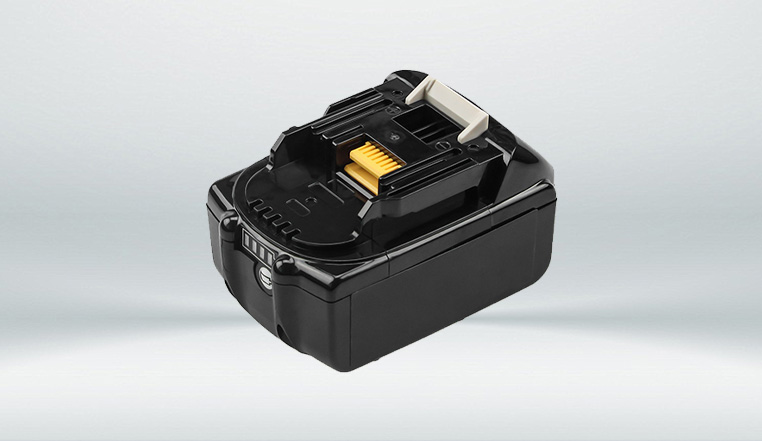
At the core of battery selection lies a fundamental difference in electrochemistry. Ni-MH technology served as the industry workhorse for decades, prized for its tolerance to rough charging conditions and stable performance in moderate-drain applications. In contrast, lithium-ion chemistry has redefined standards for energy density, weight reduction, and power output.
The primary engineering hurdle when switching chemistries is the voltage difference. Ni-MH cells typically operate at a nominal 1.2V, whereas lithium-ion cells operate at a nominal 3.6V or 3.7V. This disparity means that a simple swap is rarely possible without impacting the underlying circuitry or the motor's operating efficiency.
Determining the right path forward requires analyzing performance benchmarks against your device's duty cycle.
|
Feature |
Ni-MH Battery Packs |
Li-ion Battery Packs |
|
Energy Density |
Moderate |
High |
|
Self-Discharge |
High |
Very Low |
|
Memory Effect |
Yes |
No |
|
Low-Temp Performance |
Fair |
Good |
|
Lifecycle |
Moderate |
Long |
Lithium-ion technology clearly excels in applications requiring high energy density and long-term shelf stability. However, Ni-MH remains a viable option for specific legacy designs where the original charging circuitry is hard-wired for 1.2V chemistry and cannot be easily modified.
Managing older hardware requires a clear choice between maintaining the original design or pursuing a modern upgrade. If you are handling simple or vintage hardware where the original design specifications are non-negotiable, retaining Ni-MH battery packs is the most straightforward route. This choice avoids the need for a full redesign of the charging infrastructure and protects original electronic components from over-voltage stress.
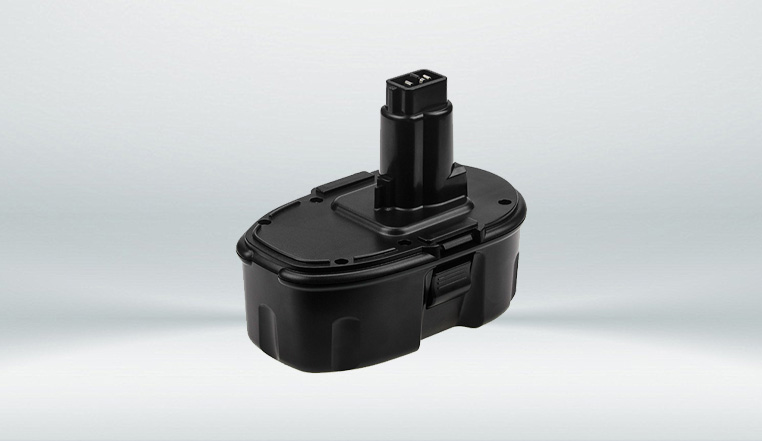
Conversely, converting to lithium-ion is a significant engineering upgrade. It is recommended for users who demand increased runtime, lighter weight, and consistent power delivery. If you decide to proceed with a conversion, you must integrate a Battery Management System. This system is essential to prevent over-charging and over-discharging, which are inherent risks in lithium-ion chemistry that were less critical in the more forgiving nickel-based systems.
Successful integration goes beyond selecting the right chemistry. Whether designing for custom battery packs or standard replacements, consider thermal management and mechanical fit. While lithium-ion cells are more efficient, they are sensitive to extreme thermal environments. If the conversion is for a professional tool or industrial device, ensure the enclosure design allows for adequate heat dissipation, especially during high-drain operations.
The choice between these two power sources should be dictated by your equipment’s age, design flexibility, and intended usage. For most modern, high-performance applications, lithium-ion provides the efficiency and power required for productivity. However, there is still value in the simplicity of Ni-MH for specific legacy tasks. Assess your equipment’s lifecycle needs, and if you require a technical audit or a custom battery architecture for your next project, feel free to contact us.


