
- Products
- Solutions
- Customization
- About
- Resources
- Contact
- Request A Quote

Continuous heavy loads often lead to premature thermal shutdowns and capacity decay in high-drain tools. To achieve a durable battery pack for high-current power tool continuous discharge, you must optimize every engineering link. Let’s explore essential strategies for thermal management and custom BMS integration, ensuring your power tool battery solutions excel under sustained stress.
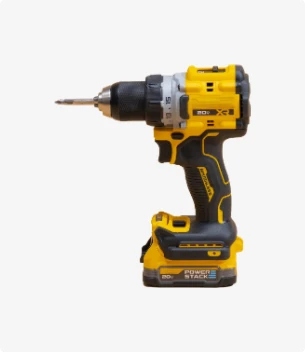
Reliable design requires distinguishing peak current from continuous working current. Tools like commercial blowers place massive, sustained demands on a pack, unlike the short bursts seen in standard drills.
Your design should prioritize low heat, stable voltage, and long cycle life. Understanding your specific tool's load profile is the essential first step toward achieving true durability during long-hour operations.
High-rate performance relies on selecting the right chemistry. Prioritize cells with low internal resistance and a verified 10C+ rating to handle constant high-drain usage without excessive voltage sag.
Using a high-grade low internal resistance cell prevents early-stage cell imbalance. Strict capacity and IR grouping are non-negotiable to ensure the pack remains reliable throughout its entire service life.
Heat is a battery system's enemy. Utilize thickened, double-layer pure nickel strips to reduce resistance at all connection points, significantly lowering the heat generated during high-current operation.
A standardized welding process ensures consistent contact. This effectively eliminates hidden "hot spots" that compromise structural integrity and electrical safety when the pack is under heavy, sustained load.
A generic board is insufficient for professional tools. You need a custom BMS for high current power tools with multi-point temperature detection to monitor heat buildup during long shifts.
Proper overcurrent settings prevent frequent, annoying shutdowns while maintaining safety. Additionally, implementing active balancing helps maintain cell consistency, which is vital for maximizing runtime in demanding outdoor environments.
The enclosure is a critical part of your thermal strategy. For tools exposed to vibration, include shock-absorbing buffers. Internal channels must be engineered to facilitate continuous heat emission.
A sealed, waterproof mold ensures that internal electronics remain protected. This design is necessary for professional-grade tools that must operate reliably during all-day work in harsh, outdoor conditions.
Scaling requires rigorous consistency control. Work with an OEM custom power tool battery partner to align your manufacturing process with strict industrial quality standards.
Designs intended for continuous use must undergo testing for UN38.3 lithium battery certification. This ensures safety during rapid charge and discharge cycles, confirming your design meets global regulatory requirements.
Rational matching of cells, optimized welding, tailored BMS parameters, and housing solves durability issues. You are welcome to send inquiries for one-stop design and manufacturing of Li-ion battery packs for your tool lineup.


