
- Products
- Solutions
- Customization
- About
- Resources
- Contact
- Request A Quote

As a product designer, you know that battery pack reliability is the heartbeat of any cordless power tool. When selecting your BMS architecture, the debate between active bms vs passive bms is more than a technical preference—it's a decision that dictates your product's lifespan and market performance.
While advanced balancing offers precision, is it truly better for power tool battery packs given the harsh environments they face? Let's evaluate which BMS system best balances cost-efficiency with high-drain performance to power your next launch.
In a multi-cell pack, consistency is fragile. High-frequency pulse discharge in tools like impact drivers often exposes internal resistance variations between cells. Over time, these minor gaps widen due to thermal stress and aging, leading to the dreaded "voltage drift."
If left unchecked, this imbalance triggers three major failures: sudden runtime drops, premature thermal shutdowns during heavy-load cycles, and worst of all, permanent damage to the weakest cell due to over-discharge. A passive cell balancing circuit acts as a safety gate at the end of a charge cycle, bleeding off excess energy. In contrast, an active balancing circuit works more like a highway bridge, actively shifting energy from strong cells to weak ones. Understanding how these systems handle cell disparities is critical when defining your battery's reliability standards for professional-grade cordless tools.
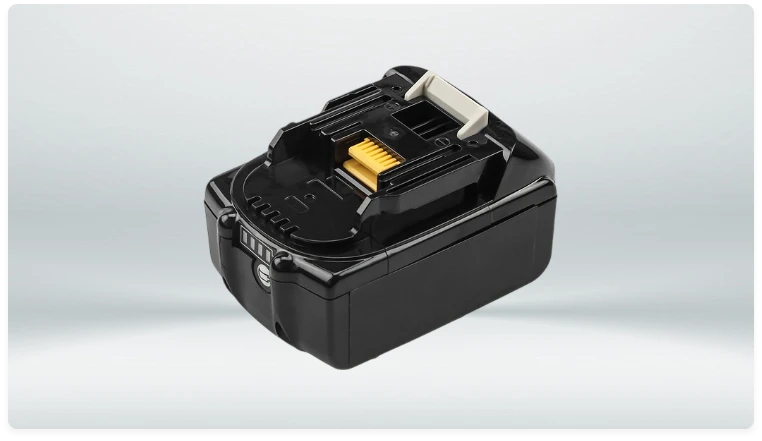
Passive Balancing is the industry standard for cost-sensitive applications. It operates primarily during the final stages of charging. When one cell hits the maximum voltage, a bypass resistor dissipates excess energy as heat. It is elegant in its simplicity, but it remains a "passive" observer during discharge. Since high-power tools suffer most during the discharge phase, passive systems cannot correct voltage gaps while the tool is actually being used.
Active Balancing changes the narrative. It utilizes DC-to-DC converters or capacitor arrays to transfer energy between cells in real-time. This active vs passive balancing difference is profound: active systems perform throughout the entire lifecycle—charge, discharge, and even idle storage. By redistributing charge, an active system keeps the total pack capacity aligned even under the intense current demands of an angle grinder or a high-torque circular saw, ensuring consistent power delivery until the very last drop of energy.
|
Comparison Item |
Passive BMS (Power Tool Pack) |
Active BMS (Power Tool Pack) |
|
Balancing Stage |
Only charging completion |
Charge / discharge / idle |
|
Balancing Current |
50–300mA |
1–6A |
|
Heat Output (Heavy Load) |
High heat risk |
Low, stable temperature |
|
Low-temp Adaptability |
Poor, fast drift |
Excellent, consistent |
|
Hardware Cost |
Low |
Higher |
|
Product Positioning |
Budget replacement batteries |
Premium OEM branded packs |
For standard handheld drills used intermittently, the heat generated by a passive system is negligible. However, for a landscape professional using a 60V mower in freezing temperatures, the active system's ability to prevent voltage drift becomes a massive performance differentiator.
Passive BMS shines in its simplicity. It requires fewer components, which enhances mass production uniformity and keeps the Bill of Materials (BOM) lean—perfect for the replacement battery market. Its primary disadvantage, however, is the lack of correction during high-drain operation, which often leads to "cell starvation" in aging packs.
Active BMS effectively mitigates these risks. By dynamically controlling the temperature and voltage balance, it significantly extends the cycle life of the pack. The trade-offs are physical; the added circuitry requires a larger PCB and a more sophisticated custom battery pack enclosure design. These technical hurdles make it better suited for high-end industrial equipment where product longevity justifies the premium price tag.
The decision boils down to your target audience. Select Passive BMS if you are targeting the mass-market, cross-border e-commerce sector where competitive pricing is the main lever for volume. It is reliable for light-duty tools and cost-optimized replacement lines.
Select Active BMS for industrial-grade applications, high-power outdoor landscaping equipment, or specialized medical devices that require strict UN38.3 compliance. If your brand aims to compete on "heavy-duty" durability, active balancing is a necessary investment. Many successful OEMs adopt a layered strategy, utilizing passive BMS for entry-level 12V lines and reserving active BMS for their professional 40V+ "pro-sumer" series to maximize profit margins.
When scaling to large volumes, work with your engineering team to integrate the BMS and protection board into a unified, modular design to reduce assembly complexity. Remember that active systems demand more robust thermal management during the initial shell molding design to account for the larger PCB footprint.
From a compliance perspective, ensure that your thermal testing for UL or UN38.3 certification accounts for the specific balancing topology, as active circuits introduce different heat signatures during rapid charge tests.
Choosing between passive and active architectures defines your product's market tier. Passive BMS remains the logical choice for high-volume, budget-conscious replacement packs, while Active BMS is essential for professional, industrial, and high-performance equipment. If you need a technical audit of your battery BMS strategy for your next project, feel free to send an inquiry. Our engineers are ready to provide a detailed quote for your 18V, 20V, or 40V custom lithium battery packs.


