
- Products
- Solutions
- Customization
- About
- Resources
- Contact
- Request A Quote

When it comes to cordless power tools, Milwaukee is widely recognized for its strong performance and system compatibility. However, many users quickly realize that choosing the right tool is only half the decision—the battery plays an equally important role. In fact, different Milwaukee battery types can significantly affect runtime, power output, tool balance, and long-term operating cost.
With that in mind, this guide explains the different types of Milwaukee batteries, how they work, and how to choose the right option for your real-world applications.
Before comparing battery types, it is helpful to understand Milwaukee’s two main cordless platforms. Milwaukee offers M12 and M18 lithium-ion battery systems, each designed for different power needs.
The M12 platform focuses on compact, lightweight tools for light-duty work, while the M18 platform supports higher power output for professional and industrial tasks. Since most high-demand tools run on M18, this article focuses on Milwaukee M18 batteries, which are available in several distinct types.
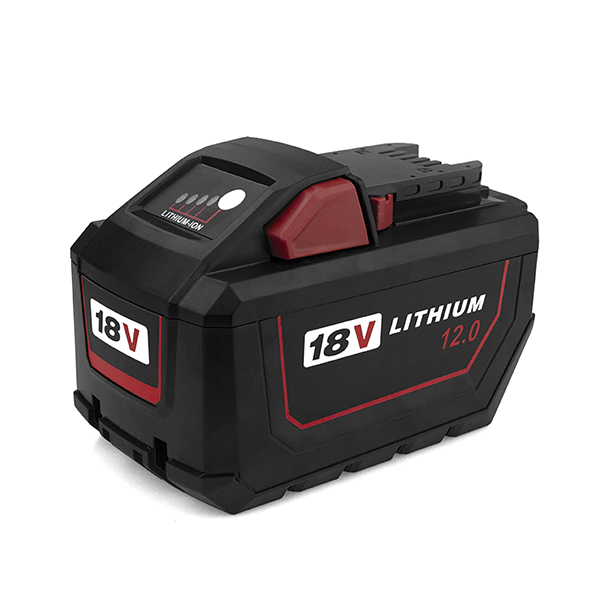
Although Milwaukee M18 batteries share the same voltage, they differ in more than just capacity. Several technical factors separate one battery type from another.
First, cell configuration determines how much current the battery can deliver safely. Second, power output capability affects whether a tool can run consistently under load. Third, battery management systems (BMS) protect the cells from overcharging, overheating, and overcurrent. Finally, thermal design influences how well a battery performs during extended or high-power use.
Together, these factors explain why two batteries with the same voltage can behave very differently in real applications.
To begin with, Milwaukee CP batteries, also known as Compact batteries, are designed for users who prioritize reduced weight and better control. These batteries typically range from lower amp-hour ratings and are physically smaller than other M18 options.
Because of their compact size, CP batteries are well suited for drills, impact drivers, and inspection tools. They allow better access in tight spaces and reduce fatigue during overhead or extended work.
However, it is important to note that compact batteries provide shorter runtime and lower sustained power output. As a result, they are not ideal for high-draw tools such as saws or grinders. Instead, CP batteries are best used for short tasks where mobility matters more than endurance.
Moving on, Milwaukee XC batteries are often considered the most versatile option in the M18 lineup. XC stands for Extended Capacity, which reflects their ability to deliver longer runtime while maintaining manageable size and weight.
These batteries are widely used with hammer drills, impact wrenches, and multi-tools. They provide a balance between power, runtime, and ergonomics, making them suitable for daily jobsite work.
While XC batteries offer better endurance than CP batteries, they are still designed for moderate power demands. Under continuous heavy loads, heat buildup may limit performance. Even so, for most users, XC batteries represent a reliable and cost-effective choice.
For more demanding applications, Milwaukee HO (High Output) batteries are built to deliver higher sustained power. Compared with standard XC batteries, HO batteries use improved cell layouts and enhanced thermal management.
As a result, HO batteries perform better in tools that require high current, such as rotary hammers, large grinders, and outdoor power equipment. They are also more stable in colder conditions, where standard batteries may lose efficiency.
That said, HO batteries are heavier and typically cost more. Therefore, they are best suited for professionals who regularly use high-load tools rather than for light or occasional tasks.
At the top of the lineup, Milwaukee FORGE batteries represent the most advanced option currently available in the M18 system. These batteries focus on fast charging, improved thermal control, and consistent power delivery under extreme conditions.
FORGE batteries are designed for sustained heavy-duty work, where overheating or voltage drop could otherwise limit productivity. They are especially useful in environments where tools are pushed continuously throughout the day.
However, because of their premium design and cost, FORGE batteries are not necessary for every user. For many applications, HO or XC batteries already provide sufficient performance.
With several Milwaukee battery types available, choosing the right one depends on how the tools are used. First, consider power demand. High-torque or continuous-use tools benefit from HO or FORGE batteries, while light-duty tools work well with CP batteries.
Next, think about runtime requirements. If long operating time is important, higher-capacity XC or HO batteries reduce downtime. On the other hand, compact batteries may be more practical for short tasks.
Finally, consider tool balance and comfort. Heavier batteries increase runtime but may reduce handling comfort. Matching the battery to the task improves efficiency and reduces unnecessary wear on both the tool and the battery.
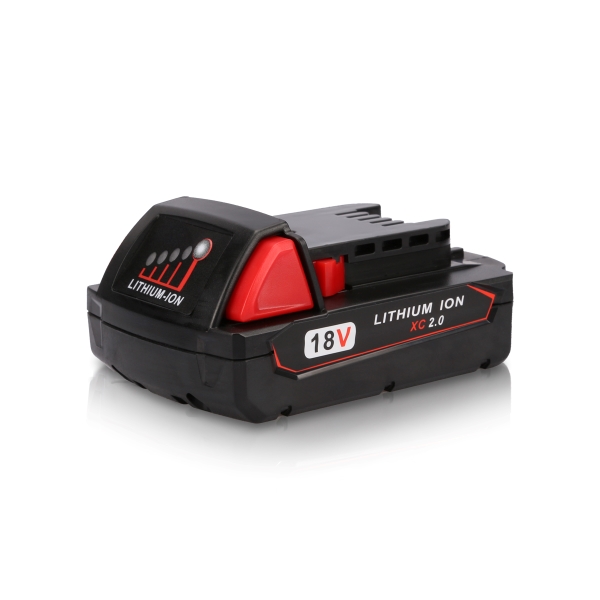
Over time, all lithium-ion batteries experience performance decline. Common signs include reduced runtime, voltage drop under load, and longer charging times. Continuing to use worn batteries can reduce tool efficiency and increase downtime.
At this point, users often compare original packs with Milwaukee battery replacement options. A well-made replacement battery can restore performance at a lower overall cost, especially for fleet users or repair businesses.
Choosing a reliable Milwaukee replacement battery manufacturer is critical. Consistent cell quality, stable BMS design, and proper safety testing all affect performance and service life.
For professional users and distributors, battery sourcing is just as important as tool selection. A dependable supplier should offer strict quality control, verified cell matching, and proven protection circuits. In addition, stable production capacity and application testing help ensure consistent performance across batches.
These factors are especially important for businesses that rely on replacement batteries for daily operations or resale.
In summary, Milwaukee offers several M18 battery types—CP, XC, HO, and FORGE—each designed for specific performance needs. Understanding these differences helps users choose batteries that match their tools, workloads, and budget.
Rather than focusing only on voltage or capacity, selecting the right battery type improves efficiency, extends tool life, and lowers total operating cost over time.
If you are looking for a dependable Milwaukee battery replacement manufacturer, RHY Battery provides high-quality lithium-ion battery solutions designed for professional applications. With strict quality control, reliable BMS design, and stable production capabilities, RHY Battery supports distributors, repair centers, and commercial users worldwide.


