
- Products
- Solutions
- Customization
- About
- Resources
- Contact
- Request A Quote

Garden tools frequently face power loss, voltage sag, and premature shutdowns during cold-weather outdoor work. Without precise BMS parameter optimization, standard settings often fail to handle sub-zero conditions. If you are developing professional equipment, this guide details how to refine custom BMS logic for your garden tool battery solutions, ensuring your tools remain operational in any climate.
Lithium-ion chemistry relies on ionic mobility, which slows significantly in sub-zero environments. As internal resistance climbs, the voltage drop during high-drain operation becomes more pronounced, often hitting the cutoff threshold prematurely.
During extended outdoor shifts, uneven heat dissipation across the pack causes cells to drift. In cold weather, this imbalance is exacerbated, as some cells may reach their lower limits faster than others, triggering early BMS protection.
Many standard battery packs utilize generic BMS profiles designed for room temperature. These settings do not account for the temporary capacity loss and voltage sag inherent in cold-climate operation, leading to frequent, unnecessary system shutdowns.
Charging a cold battery is dangerous. If the BMS allows high-current charging while the cell temperature is below freezing, metallic lithium may plate onto the anode, permanently damaging capacity and safety margins.
You must set hard temperature limits for charging. Typically, the BMS should strictly disable charging below 0°C. Advanced firmware allows for a "pre-heat" phase, where the charger is only enabled once sensors register a safe rise in temperature.
Rather than a simple "on/off" switch, implement a derating curve. For instance, between 0°C and 10°C, the BMS should throttle the charge current to 20% or 30% of the nominal rate to protect the chemistry.
Cold-temperature charging changes the cell’s voltage profile. Adjusting the overcharge protection threshold slightly downward ensures that the pack does not exceed the safe limit, preventing internal pressure buildup during low-temperature cycles.
Temperature sensors can fluctuate near the threshold. A hysteresis timer ensures the BMS doesn't oscillate between charging and stopping, which prevents stress on the MOSFETs and improves the overall longevity of your Li-ion battery packs.
Under load, cold cells experience a massive voltage dip. Implementing a dynamic Low Voltage Disconnect (LVD) that accounts for the current draw allows the tool to continue working rather than shutting down due to a transient dip.
If the battery temperature drops during operation, the BMS can automatically throttle the output current. This protects the pack from further cooling due to internal resistance heating and keeps the tool running, albeit at lower power.
Use at least two NTC thermistors placed at the hot spots of the cell array. This redundancy ensures that the BMS receives accurate data, preventing the system from ignoring a local overheating issue inside an otherwise cold pack.
Short power-on spikes for trimmers can trip a fast-acting LVD. A configurable delay prevents the BMS from shutting down during these harmless transient spikes, significantly improving user experience in winter.
In cold weather, voltage readings become less reliable. Set a longer delay for balancing activation to ensure that the BMS is responding to genuine cell drift rather than temporary fluctuations caused by uneven thermal distribution.
For professional equipment, prioritize active balancing when possible. It is more energy-efficient and faster at correcting drift, which is critical when the overall battery capacity is already constrained by the low-temperature environment.
Users need accurate feedback. An SOC algorithm that factors in temperature compensation provides a realistic "fuel gauge," preventing the frustration of a sudden battery death when the user expects 20% remaining capacity.
State of Health (SOH) values drift during long winters. Periodically updating your BMS firmware to recalibrate these values ensures that the battery stays healthy even if it remains in storage for months.
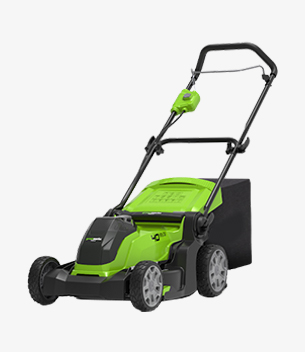
Mowers generally require consistent, moderate power. Set your BMS parameters to prioritize steady output rather than high-burst handling, optimizing for maximum runtime per charge.
Blowers demand high surges. Your BMS needs to allow higher peak-current thresholds, but implement a stricter thermal monitor to ensure the pack remains safe during these intense power demands.
Hedge trimmers create frequent spikes. Set an anti-cutoff delay that is aggressive enough to keep the tool running, but keep the thermal threshold tight to ensure safety over a full day’s work.
Chainsaws require extreme reliability. Utilize a wide-temperature BMS profile that prioritizes safety at the cost of transient performance, ensuring the tool never shuts down in a hazardous cutting scenario.
OEMs should maintain a library of preset profiles. This allows for quick deployment across different garden equipment lines without needing to redesign the entire custom battery pack for every minor change in load.
Placement is key. Ensure your NTC thermistors are embedded within the thermal-conductive filler inside the mold, rather than just floating near the cells, to ensure accurate temperature sensing during all-day work.
Global certification is essential. Ensure your low-temperature BMS thresholds are documented and validated against UN38.3 standards to guarantee that your equipment can be exported and used safely in any climate.
For markets with extreme winter seasons, offer a dual-supply scheme. Providing both standard packs and specialized cold-resistant packs allows your brand to capture a wider share of the market while maintaining quality consistency.
Optimized BMS parameters are the secret to reliable winter performance. By fine-tuning your charge and discharge logic, you can prevent failures and extend the life of your equipment. Should you require expert assistance in developing tailored lithium battery solutions for your garden tool line, our team is ready to assist with your next project.


